





Support Saves Lives: Why Caregivers Must Be Part of Suicide Prevention
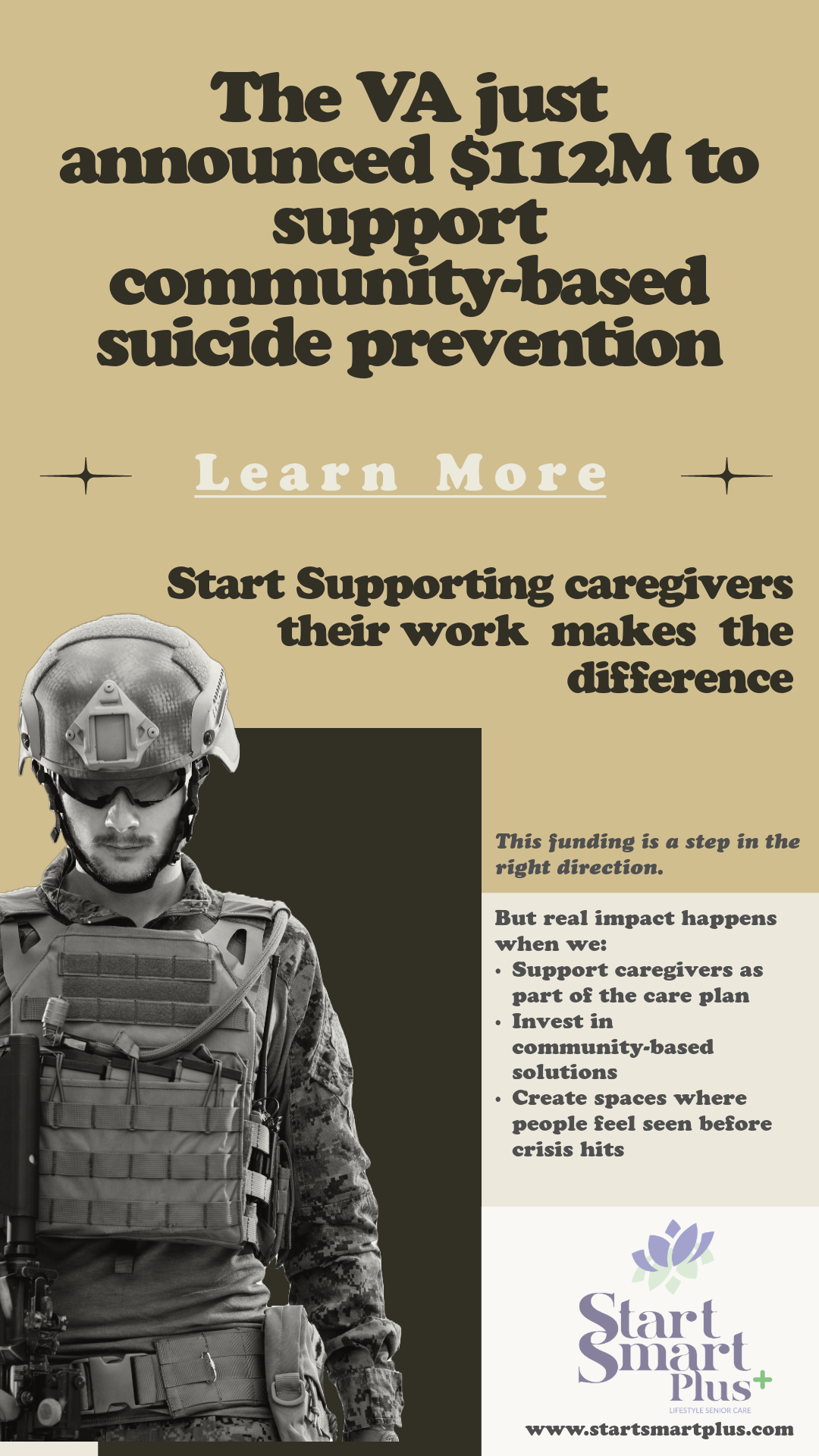
The VA’s new $112 million grant opportunity to strengthen community-based suicide prevention is more than funding — it is a reminder that support saves lives. For me, this is deeply personal as both a believer in supporting caregivers and as a veteran. VA reported 6,398 Veteran suicide deaths in 2023, about 17.5 per day.

When Independence Becomes Isolation
It AThe aging of America is not a future issue.
It is happening right now.
Much of the public conversation focuses on the rising cost of nursing homes and assisted living. And that concern is valid. There are not enough facilities, and for many seniors, the cost of long-term care is simply out of reach.
But there is another crisis unfolding quietly inside homes across the country.
It is the moment when independence becomes isolation, and when the systems designed to protect vulnerable seniors struggle to intervene.
Through my work with families navigating senior care, I have witnessed situations that reveal a troubling truth: we often recognize a crisis long before we have the authority to stop it.
Two experiences continue to stay with me.
When Everyone Can See the Crash Coming
A senior couple, married with no adult children.
The wife lives with mental illness and several chronic diseases. Despite these challenges, her physician determined she could live independently.
Her husband suffers from chronic illness and appears to be struggling with depression or untreated mental health issues. He refuses medication and cycles between hospitalization, rehabilitation, and returning home.
When home, he becomes verbally abusive toward his wife and hostile toward anyone helping.
For nearly a year:
Adult Protective Services had an open case
Local police had responded to the home several times
Home care providers documented his decline
Everyone involved could see the situation deteriorating.
But no one had the authority to stop it.
One day I happened to be present while discussing a potential service plan with him. Within minutes I noticed he was struggling to breathe. When I asked if he was in pain, he said no, he simply could not catch his breath.
I called 911.
Paramedics arrived and reviewed his medications. He was supposed to be taking medication for heart failure, and his oxygen level had dropped.
He was admitted to the hospital.
Perhaps that moment saved his life. At the very least, it bought him time.
But the bigger question remains: what happens next?
Adult Protective Services contacted the hospital social worker hoping a mental health assessment could be conducted and that he might remain admitted long enough to stabilize.
The response was uncertain.
He may ultimately be discharged home again, where the cycle could be repeated until the next crisis occurs. While refusing any homecare assistance.
Another situation still weighs heavily on me.
A relatively young senior living alone with family nearby.
This individual struggled with undiagnosed depression and chronic illness that could have been managed with medication. However, the senior refused proper nutrition and medical treatment.
The warning signs were visible.
My agency notified the family and recommended immediate intervention. The family followed through and had their loved one evaluated medically. Services were arranged after discharge.
But once home, the senior refused all support services and returned to the same self-destructive patterns.
Eventually my agency made the difficult decision to withdraw services, notified the family and
Adult Protective Services.
Within sixty days, the senior passed away due to complications connected to the very behaviors that had been flagged.
This loss still haunts me.
Somewhere along the way, the system failed.
The Gap Between Autonomy and Protection
These situations highlight a difficult reality within senior care.
Professionals, families, and agencies may recognize serious warning signs, yet legal and ethical boundaries limit intervention.
Adult Protective Services often cannot remove a person from their home without legal authority. Physicians may not see the full picture of what is happening between appointments. Families can feel overwhelmed or powerless. Care providers witness decline but lack authority to act beyond recommendations.
Everyone is trying to help.
Yet the crisis continues.
It is important to note that neither of these seniors relied on Medicaid.
This is not simply a financial problem.
It is a structural challenge involving mental health care, chronic disease management, and the legal framework surrounding personal autonomy.
How do we intervene when someone clearly needs help but refuses care?
How do we protect vulnerable individuals while still respecting their rights?
And how do we prevent crises before they escalate into tragedy?
Why This Conversation Matters Now
America is entering one of the most significant demographic shifts in its history.
Millions of adults are becoming caregivers while simultaneously balancing careers, raising children, and managing their own responsibilities. These caregivers often become the first line of defense when something begins to go wrong with a parent or loved one.
Yet they frequently find themselves navigating a fragmented system without clear pathways for intervention.
The result is a cycle of emergency care, hospital readmissions, family burnout, and preventable decline.
A Call for Collaboration
We need a broader conversation across healthcare, policy, and community services.
How do we strengthen early intervention systems?
How do we integrate mental health evaluation into chronic illness management for seniors?
How do we empower families and care professionals to act before a crisis occurs?
And how do we protect both individual rights and human dignity in the process?
These are not simple questions. But they are questions we can no longer afford to avoid.
Listening First
At Start Smart Plus, our work begins where many systems stop — by listening.
Every family’s situation is different. Every caregiver’s capacity is different. Every timeline and financial reality is different.
Understanding the full story is often the first step toward preventing crisis.
But meaningful change will require more than individual solutions. It will require collaboration across healthcare providers, policymakers, social services, and communities.
Because behind every policy discussion are real people whose lives depend on us getting this right.
The Question We Must Answer
How do we build a system that intervenes before tragedy, while still respecting the independence seniors value?
Because the Aging of America is already underway.
And the decisions we make today will determine whether our systems are prepared to meet that reality.ll Begins Here